Local businesses experience Google algorithm updates differently than national or ecommerce sites. Instead of losing organic blog traffic, local businesses lose map pack visibility, Google Business Profile suppression, and local intent keyword rankings that directly drive phone calls, directions, and foot traffic. Recovery requires optimizing your Google Business Profile, fixing NAP citation inconsistencies across directories, building genuinely useful local content, and monitoring local pack positions separately from organic rankings. Most local businesses that follow a structured recovery plan see map pack restoration within 30 to 60 days.
How Algorithm Updates Affect Local Rankings Differently Than Organic Results?
If you searched for your business name last week and appeared in the Google map pack, but today you are nowhere to be found, an algorithm update may have reshuffled your local rankings. This happens more often than most local business owners realize.
Google’s local ranking algorithm uses a different set of signals than organic search. While organic rankings depend heavily on content quality and backlinks, local pack rankings rely on three primary factors: relevance, distance, and prominence. When a core update adjusts how Google weighs these factors, local businesses feel it immediately.
Here is what makes local algorithm impacts unique:
- Map pack displacement is sudden. You can go from position 1 in the local 3-pack to completely invisible overnight. There is no gradual decline like organic traffic drops.
- Google Business Profile signals carry more weight locally. Your GBP categories, attributes, reviews, photos, and Q&A responses directly influence whether you appear in the map pack. Organic sites do not depend on these signals.
- Citation consistency matters locally but not nationally. Your business name, address, and phone number (NAP) must match exactly across every directory, map listing, and social profile. Discrepancies that would not affect a national brand can tank a local business.
- Review signals fluctuate with updates. Google periodically adjusts how much weight it gives to review quantity, recency, and sentiment. An update that increases review importance can push review-rich competitors above you.
Understanding these differences is critical because applying generic SEO recovery tactics to a local business usually fails. The recovery path for a local salon that lost map pack visibility is fundamentally different from the path for an e-commerce store that lost product page rankings, which I cover separately in my e-commerce algorithm recovery guide.
Google Business Profile Optimization for Recovery
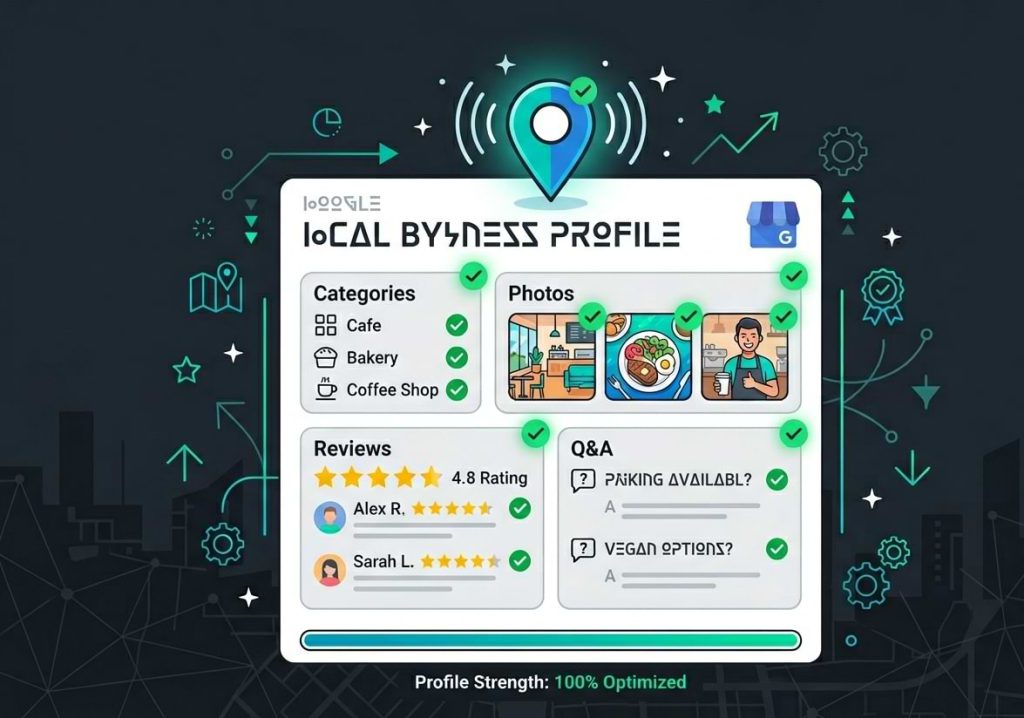
Your Google Business Profile is the single most important asset for local recovery. If your GBP is incomplete, miscategorized, or stale, no amount of website optimization will restore your map pack position.
Here is the GBP recovery checklist I work through with every local client:
Categories and Attributes
Your primary category must match exactly what your business does. I have seen local businesses lose map pack positions because they chose a broad category like ‘Consultant’ instead of a specific one like ‘Marketing Consultant’ or ‘SEO Consultant.’ Google matches search queries to categories, so precision matters.
Add every relevant secondary category. Fill out all available attributes for your business type, including accessibility options, payment methods, and service offerings. These attributes help Google match your profile to specific user queries.
Photos and Visual Content
Businesses with more than 100 photos receive 520% more calls than the average listing, according to Google’s own data. Upload high-quality photos of your storefront, interior, team, and products. Add new photos at least monthly to signal that your business is active.
Remove any stock photos. Google’s systems can detect generic stock imagery, and real photos of your actual business build trust with both Google and potential customers.
Reviews and Responses
Review quantity and recency are direct ranking signals for the local pack. Ask satisfied customers to leave reviews consistently rather than in bursts. Respond to every review, both positive and negative, within 48 hours.
Your responses should be specific and personalized, not generic ‘Thank you for your feedback’ templates. Google evaluates response quality as an engagement signal.
Q&A Section
Most local businesses ignore the Q&A section entirely. Seed it with common questions your customers actually ask, then provide detailed, helpful answers. This creates additional keyword-rich content directly on your GBP listing.
Local Citation Consistency Audit: NAP Discrepancies That Tank Rankings
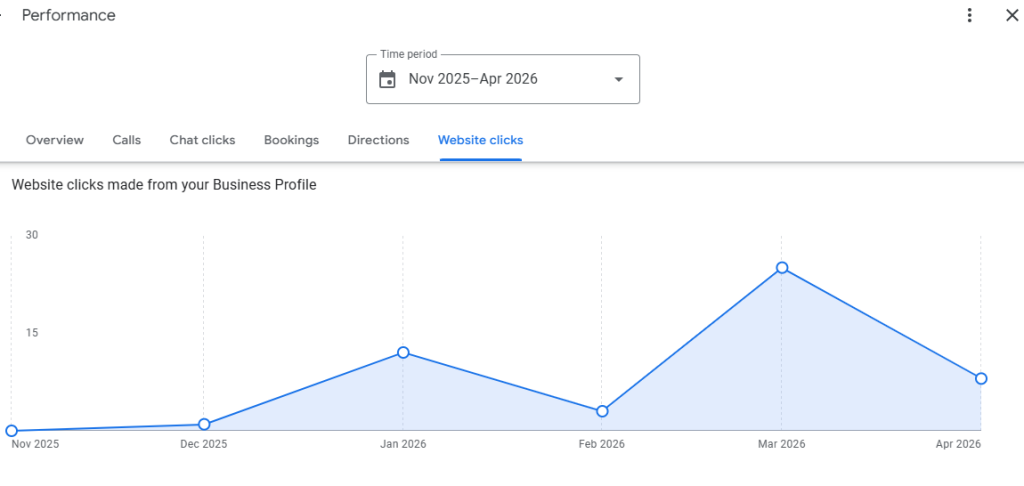
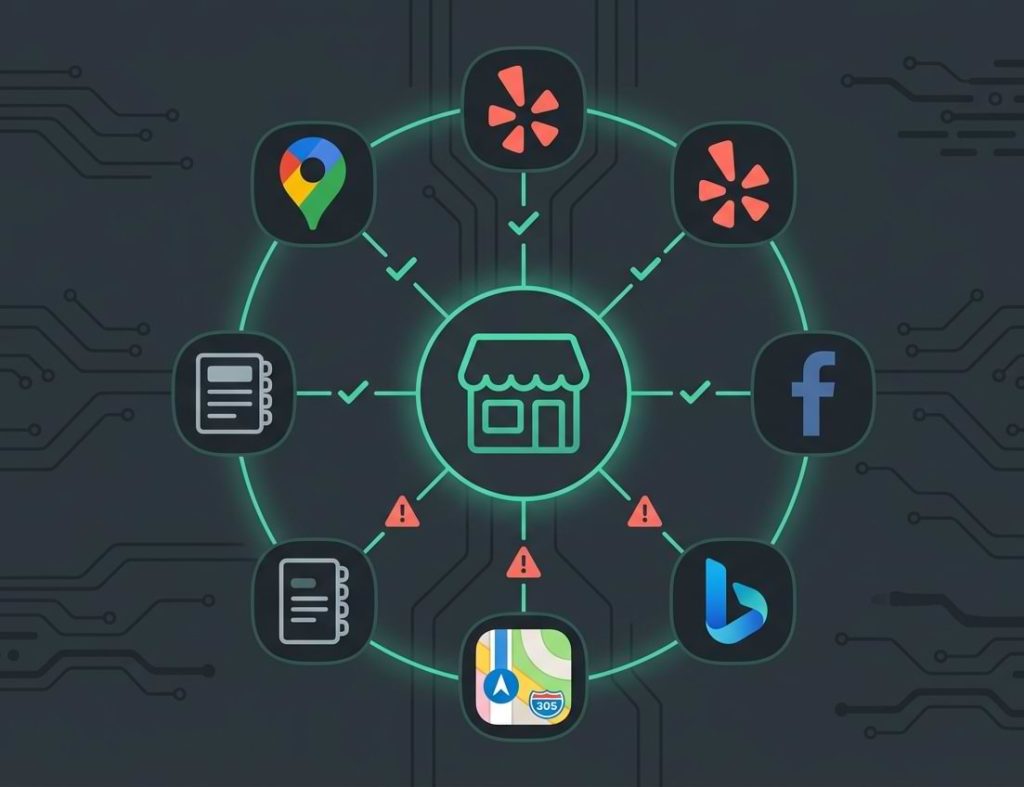
NAP stands for Name, Address, and Phone number. If your business information does not match exactly across Google, Yelp, Facebook, Bing Places, Apple Maps, industry directories, and your own website, Google loses confidence in your business data.
After algorithm updates, I frequently find that citation inconsistencies that were previously tolerable suddenly cause ranking drops. Google tightens its data quality standards with each update, and businesses with messy citations get filtered out.
Here is what to audit:
- Business name variations. ‘Joe’s Plumbing’ vs ‘Joe’s Plumbing LLC’ vs ‘Joes Plumbing’ are three different entities in Google’s system. Pick one exact name and use it everywhere.
- Address formatting. ‘Suite 200’ vs ‘Ste 200’ vs ‘#200’ creates confusion. Standardize your address format across every listing.
- Phone number consistency. If your website shows a tracking number but your GBP shows your direct line, that mismatch hurts. Use your primary business number consistently.
- Old locations. If you moved offices or changed phone numbers, outdated listings on directories you forgot about can suppress your current listing.
Use a tool like BrightLocal, Moz Local, or Whitespark to scan your citations across major directories. Fix every discrepancy, then verify the corrections are live. For the official documentation on how Google uses business data across the web, review Google’s Business Profile guidelines, which outline exactly what Google expects from local business listings.
Local Content Strategy: Service Area Pages Done Right
Local businesses often create thin service area pages hoping to rank in multiple cities. After core updates, these pages are among the first to get devalued because they offer no unique value per location.
A page that says ‘We offer plumbing services in Richmond’ with identical content to your page about ‘plumbing services in Henrico’ is exactly the kind of thin local content Google targets. Here is how to fix it:
- Add genuine local context. Reference local landmarks, neighborhoods, building types, and climate-specific issues relevant to each service area. A plumber in Richmond should mention common pipe issues in Fan District row homes, not just paste the city name into a template.
- Include real local case studies. Describe actual jobs you completed in each service area. This provides first-hand experience signals that Google values under E-E-A-T.
- Embed local schema markup. Add LocalBusiness and Service schema to each service area page with the specific geographic coverage area defined.
- Consolidate instead of proliferate. If you serve 15 nearby towns, you do not need 15 identical pages. Create one strong regional page or group nearby areas together with unique content for each section.
The consolidation principle here mirrors what I teach in my content pruning strategy guide, where the same triage logic applies: keep pages with genuine unique value, consolidate thin duplicates, and redirect or remove the rest.
If your local business also has a backlink profile that includes directory spam or paid local links, those need separate attention. My backlink audit and disavow guide covers the cleanup process.
Local vs. Organic Recovery: Key Differences at a Glance
| Factor | Local Pack Recovery | Organic Recovery | Priority | Measurement |
| Primary ranking signal | GBP completeness + reviews + proximity | Content quality + backlinks + E-E-A-T | Critical | GBP audit score |
| Citation/NAP accuracy | Direct ranking factor | Minimal impact | Critical for local | BrightLocal or Moz Local scan |
| Review signals | High weight in map pack | Low direct weight | High for local | Review count, recency, avg rating |
| Content depth | Service area pages + local context | Long-form authority content | Medium | Unique word count per location page |
| Backlink profile | Local directory links matter | Domain authority links matter | Medium | Local vs. national link ratio |
| Recovery timeline | 30-60 days typical | 30-90 days typical | Varies | Map pack position tracking |
Real Local Recovery: What the Process Looks Like?
To show how local recovery works in practice, here is a condensed view of the process I applied to a local service business that lost map pack visibility after a core update.
The business had a partially completed Google Business Profile, inconsistent NAP across 30+ directories, zero photos uploaded in the previous six months, and five thin service area pages with identical content apart from the city name.
The recovery followed this sequence:
- Week 1: Complete GBP audit and optimization. Added correct secondary categories, filled all attributes, uploaded 25 new photos of the actual business, team, and completed work. Responded to all unanswered reviews.
- Week 2: Full citation audit using BrightLocal. Identified 34 NAP inconsistencies across directories. Submitted corrections to all major platforms.
- Week 3 to 4: Consolidated five thin service area pages into two strong regional pages with genuine local content, real case studies per area, and LocalBusiness schema. Redirected removed pages.
- Week 4 to 6: Seeded GBP Q&A section with 10 common customer questions. Launched a review request campaign targeting recent satisfied customers.
Map pack visibility began returning within three weeks. Full restoration to the local 3-pack took approximately 45 days.
For businesses where the traffic drop might not actually be algorithm-related but instead caused by AI Overviews displacing local results, my AI Overviews traffic recovery guide helps distinguish between those two very different causes.
Common Local SEO Recovery Mistakes to Avoid
Local business owners are often non-technical, which means recovery mistakes are common. Here are the ones I see most frequently:
- Ignoring Google Business Profile completely. Many local businesses focus entirely on their website and forget that GBP is the primary ranking factor for the map pack.
- Creating dozens of thin city pages. Publishing 20 nearly identical service area pages is a thin content signal that core updates specifically target.
- Buying fake reviews. Google’s review fraud detection has become extremely sophisticated. Fake review patterns can trigger GBP suspension, which is far worse than low review counts.
- Neglecting citation cleanup after moving locations. Old address listings on forgotten directories create conflicting signals that suppress your current listing.
- Using call tracking numbers on GBP. If your GBP phone number does not match your website and citations, you are creating a NAP inconsistency at the most important touchpoint.
- Applying national SEO tactics to a local problem. Publishing 3,000-word blog posts will not fix a map pack drop. Local recovery requires local signals, not content volume. For YMYL local businesses like medical practices or law firms, the trust requirements are even higher, as I outline in my YMYL site recovery guide.
Recommended External Resources
For the official rules governing Google Business Profiles and local listing management, review Google’s Business Profile guidelines and policies, which outline what Google expects from local business listings and what can trigger suspension.
To understand the three core factors Google uses to rank local results, the Google documentation on how local results are ranked explains relevance, distance, and prominence in detail.
Frequently Asked Questions
Why did my local business disappear from Google Maps after an update?
Google algorithm updates periodically adjust how local pack rankings are calculated. If your Google Business Profile is incomplete, your citations have NAP inconsistencies, your reviews are stale, or your local content is thin, an update can push you below competitors who score better on these signals.
How long does local SEO recovery take?
Most local businesses see map pack restoration within 30 to 60 days after implementing GBP optimization, citation cleanup, and local content improvements. The timeline depends on how many issues existed before the update and how quickly corrections propagate across directories.
Do Google reviews affect local rankings?
Yes. Review quantity, recency, average rating, and response rate are all direct ranking signals for the local map pack. Businesses with more recent positive reviews and active owner responses consistently outrank those with stale or unresponded review profiles.
Should I create separate pages for every city I serve?
Only if you can write genuinely unique content for each location with real local context, case studies, and specific service details. Identical pages with only the city name swapped are thin content and will hurt your rankings after core updates. Consolidate nearby areas into strong regional pages instead.
Can a local business get a manual action from Google?
Yes. Local businesses can receive manual actions for fake reviews, keyword stuffing in business names, using fake addresses, or other GBP policy violations. These are separate from algorithmic ranking changes and require a different resolution process through Google Business Profile support.

Local business disappeared from Google Maps after an update?
I am Kawsar Ahmmed, a Google SEO algorithm recovery expert. I recover local rankings and map pack visibility for service businesses, restaurants, medical practices, and retail locations. If your local business lost visibility after a Google update, I can audit your GBP, clean up your citations, and build a recovery plan that restores your map pack position.