US businesses need an SEO recovery expert who understands the unique challenges of American search: FTC disclosure compliance, HIPAA-adjacent YMYL signals for healthcare sites, fierce SERP competition across every vertical, and Google Business Profile volatility in US local markets. I am Kawsar Ahmmed, founder of SEO Algorithm Recovery, and I work with American companies across every industry and time zone. With 300+ recoveries, an 8/10 success rate, and clients in 30+ countries including dozens of US-based businesses, I provide timezone-flexible consulting, screen-share audit walkthroughs, and weekly progress reporting tailored to US business hours. Every engagement starts with a free penalty audit.
Why US Businesses Face Unique Algorithm Recovery Challenges?
The United States is the most competitive search market in the world. American SERPs are denser, Google’s quality evaluation is stricter for US-targeted content, and the regulatory environment creates compliance signals that directly affect how Google assesses your site.
I work with US businesses regularly, and the same country-specific challenges come up in every recovery engagement:
- FTC disclosure compliance. The Federal Trade Commission requires clear disclosure of affiliate relationships, sponsored content, and endorsements. US sites missing proper FTC disclosures face both legal risk and algorithmic quality signals. Google’s quality raters are specifically trained to evaluate US disclosure compliance, and sites lacking transparent commercial disclosures often score lower in trustworthiness assessments.
- HIPAA-adjacent YMYL evaluation. US healthcare websites face the strictest E-E-A-T standards globally. Google’s Quality Rater Guidelines apply heightened scrutiny to American health content because US health misinformation carries direct patient safety implications. Recovery for US health sites requires demonstrable medical credentials and editorial review processes.
- US local SEO volatility. American local search results shift more frequently than other markets because of the sheer density of businesses competing in local packs across 50 states. The March 2026 Core Update triggered significant local ranking disruption across US metro areas.
- Competitive SERP density. US search results feature more competitors, more ads, more AI Overviews, and more featured snippets than any other market. Recovery in American SERPs requires not just fixing quality issues but outperforming a larger, better-funded competitor set.
These factors mean that a generic global recovery approach will not work for US businesses. You need a specialist who understands the American search landscape specifically. I have recovered US-based sites across healthcare, legal, financial services, ecommerce, real estate, and SaaS, and each vertical required US-market-specific adjustments to the standard recovery framework.
US Industries Most Affected by Google Algorithm Updates
Not all US industries get hit equally. Some verticals are disproportionately affected because of how Google’s quality evaluation systems interact with industry-specific content patterns.
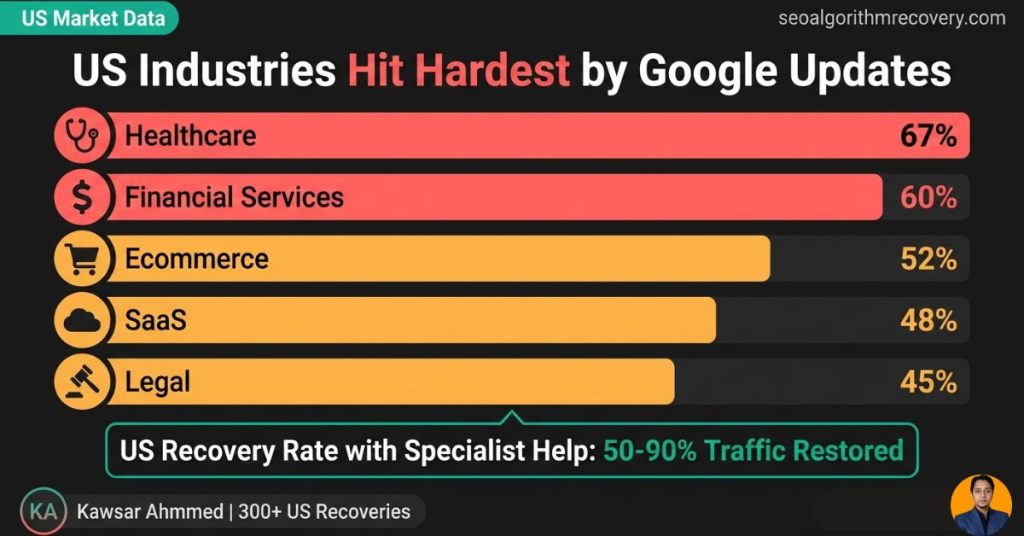
- US healthcare sites: 67% of YMYL health sites experienced negative ranking impacts during recent core updates. American health sites without board-certified author attribution and peer-reviewed source citations face the steepest declines.
- US legal services: Law firm websites with generic practice area pages and no attorney-specific content are losing rankings to firms that publish detailed case results, bar credentials, and jurisdiction-specific expertise.
- US financial services: Fintech companies and financial advisors face strict YMYL standards. Sites lacking verifiable SEC registrations, FINRA credentials, or CFP designations see disproportionate traffic drops.
- US ecommerce: 52% of ecommerce sites were affected by recent updates. American online retailers with thin product descriptions, AI-generated category pages, and missing customer reviews are the primary targets.
- US SaaS companies: Software companies hit by comparison page bloat and programmatic content scaling. I cover the full SaaS-specific recovery approach in my SaaS SEO recovery guide.
Regardless of your industry vertical, recovery for US businesses follows the same core principles I apply across all my engagements: diagnose the specific update impact, audit content quality against E-E-A-T standards, prune thin pages, rebuild authority signals, and monitor progress through Google Search Console. The difference is in the industry-specific adjustments and US compliance signals layered on top. For a broader view of how businesses recover after algorithm hits, I break down the full framework in my dedicated guide.
How I Work with US Clients Remotely?
US business owners often ask whether working with a remote recovery specialist is effective. The answer is yes, and here is why: algorithm recovery is a data-driven discipline. Every decision I make is based on your Google Search Console data, site audit results, and content quality analysis. None of that requires physical proximity.
Here is exactly how my US client engagements work:
- Timezone-flexible scheduling. I accommodate US Eastern, Central, Mountain, and Pacific business hours for all calls, screen-shares, and deliverable reviews. Most US clients prefer morning EST or afternoon PST check-ins, and I make that work.
- Secure GSC and analytics access. I set up read-only access to your Google Search Console and Google Analytics 4 accounts within the first 24 hours. Your data stays in your control at all times.
- Screen-share audit walkthroughs. Every diagnostic finding and recovery recommendation is presented via live screen-share so you see exactly what I see. No black-box reporting.
- Weekly progress reporting. Every US client receives a structured weekly report covering ranking changes, traffic trends, implementation status, and next-step priorities. Reports are delivered on your preferred day and time.
- 48-hour initial assessment. Within two business days of engagement, you receive a preliminary diagnostic identifying which update hit your site, which content categories were affected, and the recovery viability assessment.
I currently serve US clients across multiple time zones and have never had a client engagement fail because of geography. Recovery expertise matters more than proximity. If you want to evaluate what working with a dedicated core update recovery consultant looks like before committing, I walk through my entire methodology on that page.
US SEO Recovery: What to Expect by Engagement Phase?
| Phase | What Happens | US-Specific Details |
| Free Assessment | Site review, update identification, recovery viability | 48-hour turnaround, US business hours scheduling |
| Diagnostic Audit | GSC analysis, content scoring, E-E-A-T evaluation | FTC compliance check, YMYL credential verification, US competitor benchmarking |
| Recovery Implementation | Content fixes, E-E-A-T building, technical corrections | US regulatory signal optimization, American SERP feature targeting |
| Local SEO Recovery | GBP optimization, citation cleanup, local content | US city/state targeting, American directory submissions, review management |
| Post-Recovery Monitoring | Ongoing tracking, future update preparation | 90-day monitoring, quarterly health checks, US market trend alerts |
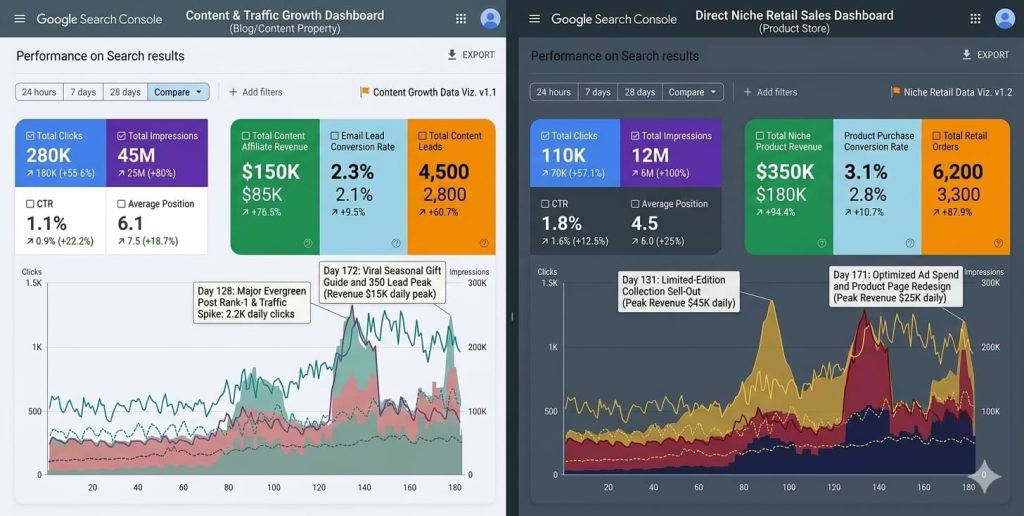
| Measurement | Traffic restoration %, ranking recovery by query cluster, E-E-A-T score improvement | US organic traffic restored 50-90%, local pack positions recovered, US-specific compliance signals verified |
US Client Recovery Case Study
A US-based ecommerce company in the home improvement vertical lost 58% of organic traffic after the December 2025 Core Update. Their site had 400+ product pages with thin manufacturer-copied descriptions, no customer reviews integrated on-page, and zero author attribution on their buying guides.
What I did:
- Ran a full diagnostic audit, identifying 180 thin product pages and 45 duplicate buying guides as the primary quality signals triggering the demotion
- Consolidated 180 thin pages into 60 comprehensive product hubs with original photography, customer review integration, and expert buying recommendations
- Added named author bios with verifiable home improvement credentials to every buying guide
- Implemented Product, Review, and FAQ schema markup across all product and category pages
- Optimized their Google Business Profile for local search visibility in their primary US metro markets
Results after the March 2026 Core Update confirmed the improvements:
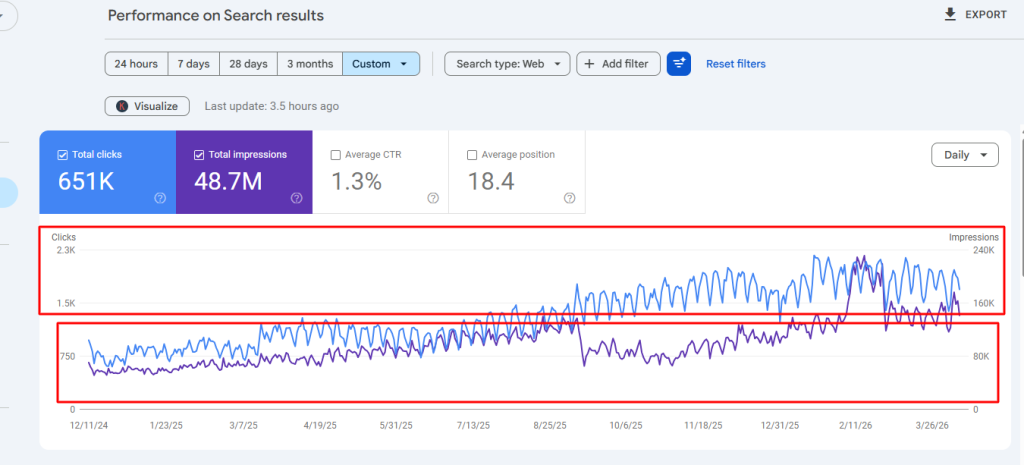
- Organic traffic recovered from 58% loss to within 12% of pre-update levels (46% recovery)
- Featured snippets captured for 7 high-value product category queries
- Local pack visibility restored across 3 US metro areas
- Monthly organic revenue increased by $50000 compared to post-update low point
This is one example from dozens of US-based recoveries in my portfolio. Every US engagement follows the same structured methodology, customized for the client’s specific industry, market, and competitive landscape.
US-Specific Recovery Considerations
Beyond the standard recovery framework, US businesses need to address country-specific signals that Google’s American quality raters evaluate. According to Google’s Search Quality Rater Guidelines, quality raters are recruited from specific regions and evaluate content through the lens of their local market expectations.
- Google Business Profile optimization. US local search is the most competitive in the world. Complete GBP profiles with verified US addresses, local phone numbers, high-resolution photos, and active review management are table stakes for local recovery
- US domain authority benchmarks. American SERPs have higher average domain authority than other markets. Recovery in US search often requires more aggressive authority building to compete with established American brands
- American competitor analysis. I benchmark US clients against their direct American competitors, not global averages. This reveals the specific content gaps and E-E-A-T shortfalls relative to who actually outranks you in US search results
- US compliance signals. Privacy policies referencing US state laws (CCPA, state-specific health data regulations), ADA accessibility compliance, and FTC endorsement disclosures all contribute to trust signals that Google’s US-based quality raters evaluate
If you are evaluating what to look for in a recovery specialist before hiring, I published a complete guide to hiring an SEO recovery expert that covers the five qualifications to verify and the red flags that signal an unqualified provider.
Common Mistakes US Businesses Make During Recovery
- Hiring a generalist US SEO agency for algorithm recovery. Growth-focused agencies do not have the diagnostic expertise to reverse algorithmic demotions. Recovery requires a specialist, not a full-service retainer
- Ignoring FTC and compliance signals. US businesses often focus entirely on content quality while overlooking regulatory compliance signals that Google’s American quality raters specifically evaluate
- Treating local and organic recovery as separate projects. For US businesses with physical locations, local pack rankings and organic rankings are interconnected. Recovering one without addressing the other leaves traffic on the table
- Expecting immediate results. US SERPs are more competitive than other markets, which means recovery can take slightly longer. Standard US recovery timelines run 2-4 months for most industries and 4-8 months for YMYL verticals
- Not investing in original content. American search results reward originality more heavily because the competitor set is larger. Generic content that might rank in smaller markets gets buried in US SERPs
Frequently Asked Questions
Can a non-US-based consultant effectively recover US websites?
Yes. Algorithm recovery is data-driven work performed through Google Search Console, Semrush, Ahrefs, and direct site analysis. Physical location does not affect diagnostic accuracy or recovery outcomes. I serve US clients across all time zones with timezone-flexible scheduling and have recovered dozens of American websites successfully.
How much does algorithm recovery cost for US businesses?
My US client engagements start at $500/month, which includes diagnostic audit, custom recovery roadmap, implementation guidance, and weekly progress reporting. This is a fraction of the organic revenue most US businesses lose after an algorithm hit. Every engagement begins with a free assessment before any financial commitment.
Which US industries have the best recovery prospects?
US ecommerce, SaaS, and professional services businesses typically see the strongest recovery results because they have genuine expertise to demonstrate. US healthcare and financial services sites can also recover but require more time due to heightened YMYL evaluation standards.
Do you handle US local SEO recovery as well?
Yes. US local SEO recovery is a core part of my service for American businesses with physical locations. This includes Google Business Profile optimization, US directory citation cleanup, local content strategy, and review management. I have restored local pack visibility for US businesses across multiple metro areas.
How quickly can you start working on my US site?
I provide the initial assessment within 48 hours of engagement. For US clients, I schedule kickoff calls during your preferred business hours and deliver the complete diagnostic audit within the first week. Implementation begins immediately after audit approval. Explore my full algorithm recovery services to see the complete engagement structure.
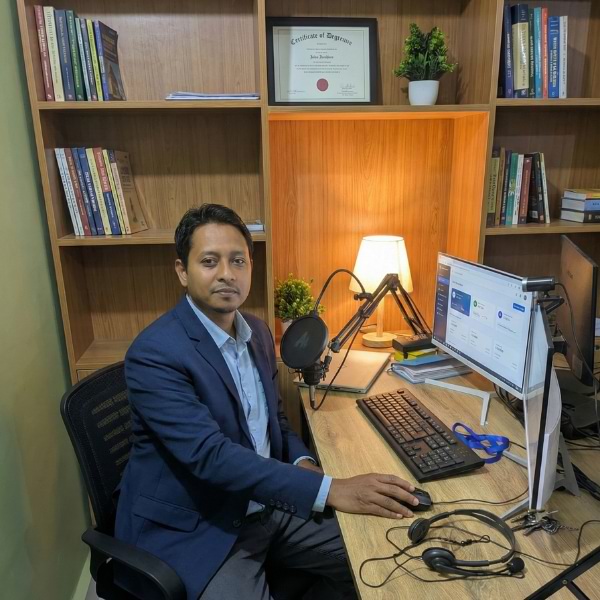
US Business Lost Rankings After a Google Update?
I work with American companies across every industry and time zone. 300+ recoveries. 8/10 success rate. 4.8-star rating. Timezone-flexible consulting tailored to US business hours. Every engagement starts with a free penalty audit for your US site.