Site reputation abuse is a Google spam policy that targets third-party content published on an established website with little or no editorial oversight, where the primary purpose is to exploit the host site’s ranking signals to manipulate search results.
Google introduced this policy in March 2024 and began enforcing it through manual actions in May 2024. By November 2024, Google expanded the definition to include content with first-party involvement if its core purpose is still to exploit the host’s authority. In 2026, enforcement is tighter than ever, and the European Commission has opened a formal investigation into whether this policy unfairly harms publishers under the Digital Markets Act.
I have helped site owners recover from every type of Google penalty over the past 7 years. Site reputation abuse is one of the most misunderstood penalties I see. Many site owners do not even realize they have one until traffic disappears from an entire section of their site. This guide explains what triggers it, how Google detects it, and how to fix it.
How does Google define site reputation abuse?
Google’s spam policies define site reputation abuse as the practice of publishing third-party pages on a site in an attempt to take advantage of the host site’s ranking signals. The content is typically independent of the host site’s main purpose, produced without close oversight, and provides little to no unique value to users.
This is different from legitimate guest posting or editorial partnerships. The distinction comes down to intent and control. If a finance news site publishes an in-depth investment analysis written by a credentialed contributor under editorial review, that is not abuse. If the same site rents out a subdirectory to a third-party coupon aggregator that publishes templated deal pages with no editorial oversight, that is exactly what this policy targets. Understanding the difference between manual actions and algorithmic penalties is the first step in diagnosing what hit your site.
Google also clarified in its November 2024 update that editorial involvement alone does not exempt content from this policy. According to Google’s spam policies documentation, no amount of first-party oversight changes the third-party nature of the content if its primary purpose is ranking manipulation.
How Google Detects Site Reputation Abuse?
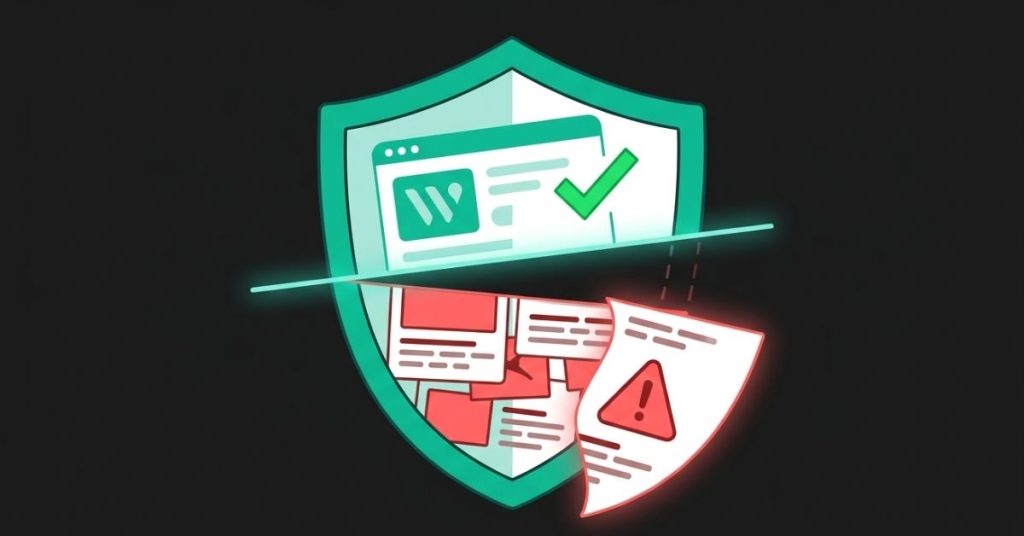
Enforcement currently operates through manual actions. Google’s human review team evaluates reported sites and issues penalties through Search Console. However, Google has also confirmed that its algorithms can independently identify when a section of a site is starkly different from the main content and treat it as a standalone entity, stripping it of the parent domain’s authority signals.
Here are the detection signals Google evaluates:
| Detection Signal | What Google Looks For |
| Topical Divergence | Third-party content that does not align with the host site’s primary expertise or editorial focus |
| Publishing Pattern Shifts | Sudden changes in topics, author bylines, writing style, or publishing frequency that indicate externally supplied content |
| Section-Level Independence | Subfolders or subdomains that operate independently from the main site’s content strategy and editorial standards |
| Link Graph Anomalies | Artificial link-building patterns commonly associated with parasite SEO placements |
| Monetization Signals | Aggressive affiliate structures, coupon aggregation, or lead generation forms that prioritize revenue over user value |
If your site experienced a sudden traffic drop isolated to a specific section or subdirectory, run a full SEO audit using a structured checklist to determine whether site reputation abuse is the cause.
Real-World Examples That Triggered Penalties
Several high-profile sites received manual actions after Google expanded enforcement in November 2024. Sections of Forbes Advisor, CNN Underscored, WSJ Buyside, and Men’s Journal were removed from Google’s index entirely. In each case, the penalized sections hosted third-party product reviews, coupon aggregation, or affiliate comparison content that was topically disconnected from the parent site’s core editorial mission.
These are not edge cases. The pattern is consistent across the sites I audit. The most common triggers I see in 2026 include:
- Coupon and deal sections hosted under a news domain’s authority, with content supplied by a third-party partner
- “Best of” product roundups published without original testing, photography, or first-hand experience signals
- Sponsored content hubs where the editorial process is controlled by the advertiser rather than the publisher
- Affiliate comparison pages with templated layouts that change only the product name across dozens of URLs
Many of these patterns overlap with issues identified in Google’s spam update enforcement cycles, where SpamBrain targets manipulative content at scale.
Step-by-Step Recovery From a Site Reputation Abuse Penalty
Recovery from this penalty requires both content removal and process documentation. Google does not just want the offending pages gone. They want proof that the system allowing those pages has been fixed.
Step 1: Identify the Penalized Section
Check your Search Console under Security & Manual Actions. The notification will specify which section of your site is affected. Cross-reference this with your traffic data to identify the exact URLs and subdirectories impacted.
Step 2: Remove or Noindex Violating Content
Noindex every page in the flagged section immediately. Do not simply edit the pages or move them to a different subdirectory. Google’s documentation explicitly warns that moving content to another location on the same domain may be treated as policy circumvention, which can trigger broader penalties across your entire site.
Step 3: Terminate Third-Party Content Agreements
End any arrangements where external partners supply content primarily to rank using your domain’s authority. Document the termination with dates, partner names, and contract details. If you have experienced traffic drops after recent Google updates, cleaning up these partnerships should be your first priority.
Step 4: Document Your New Editorial Process
Create a written editorial policy that covers how all content on your site is produced, reviewed, and approved. This is not optional. Google’s reconsideration review team needs evidence that the process has changed, not just the content.
Step 5: Submit a Reconsideration Request
Be specific in your submission. List the exact number of pages removed, the partners terminated, and the new editorial controls in place. A vague request like “we have fixed the issues” will get rejected. You can review my full audit methodology and recovery framework for a detailed walkthrough of how I structure these submissions for clients.
The EU DMA Investigation: What It Means for Site Owners in 2026
On November 13, 2025, the European Commission formally opened proceedings to assess whether Google’s site reputation abuse policy violates the Digital Markets Act. According to the European Commission’s official announcement, regulators found indications that Google is demoting publisher content in search results when those publishers include commercial partner content, even when that content represents a legitimate revenue stream.
The investigation focuses on whether Google is applying fair, reasonable, and non-discriminatory conditions to publishers as required under Articles 6(5) and 6(12) of the DMA. If Google is found non-compliant, penalties could reach up to 10% of Alphabet’s global annual revenue.
For site owners, this creates uncertainty. The policy could be softened for publishers in the EU, but enforcement for clearly manipulative parasite SEO is unlikely to change. My recommendation: do not wait for regulatory outcomes. Clean up any third-party content that relies on your domain’s authority rather than earning its own. That approach protects you regardless of how the investigation concludes.
What Is NOT Site Reputation Abuse?
Google has been clear that not all third-party content violates this policy. Legitimate practices that remain safe in 2026 include content from credentialed guest contributors published under genuine editorial review, wire service content such as AP or Reuters that supplements a news site’s coverage, affiliate links marked with appropriate disclosure tags, and sponsored content where the publisher maintains full editorial control over quality and relevance. If your content strategy aligns with Google’s helpful content standards, you are in a strong position.
Is Your Site at Risk?
Site reputation abuse penalties are expanding in scope, and Google’s detection capabilities are only getting sharper. If you host any third-party content, sponsor-supplied pages, coupon sections, or affiliate hubs, now is the time to audit before the next enforcement wave hits.
I offer a free site reputation abuse compliance check. I will review your site’s content structure, flag any sections at risk, and give you a clear action plan. With 300+ recoveries behind me, I know exactly what Google’s review team looks for and how to get penalties removed.
Request your free audit at seoalgorithmrecovery.com/contact.
About the Author
Kawsar Ahmmed is the founder of SEO Algorithm Recovery and a specialist in Google penalty diagnosis and recovery. With 7+ years of focused experience and 300+ successful site recoveries, he helps businesses across ecommerce, healthcare, media, SaaS, and local services regain lost organic traffic after algorithm updates and manual actions.