Ecommerce sites are among the hardest hit by Google algorithm updates because of thin product descriptions, duplicate manufacturer content, and bloated faceted navigation. Recovery requires fixing product pages for depth and originality, consolidating crawl-wasting filter URLs, strengthening E-E-A-T trust signals, and monitoring progress across one to two update cycles. Most online stores that follow a structured recovery plan see measurable ranking improvements within 30 to 60 days.
Why Ecommerce Sites Are Especially Vulnerable to Algorithm Updates?
If you run an online store and your traffic dropped after a recent Google core update or spam update, you are not alone. Ecommerce websites carry structural weaknesses that make them disproportionately vulnerable to algorithmic reassessments.
I have recovered dozens of ecommerce sites across fashion, electronics, home goods, and health supplements. The same patterns show up repeatedly:
- Thin product descriptions. Hundreds or thousands of product pages with only manufacturer-supplied copy that appears on every other retailer’s site.
- Duplicate content at scale. Identical or near-identical descriptions across color variants, sizes, or regional SKUs create massive content redundancy that Google devalues.
- Faceted navigation bloat. Filter combinations (brand + color + size + price range) generate thousands of indexable URLs with little unique content, draining crawl budget and diluting page authority.
- Weak E-E-A-T signals. Many stores lack author information, transparent return policies, verifiable business details, and genuine customer proof.
- Aggressive affiliate or coupon structures. Sites relying on coupon pages, affiliate landing pages, or doorway-style category pages often trigger SpamBrain pattern detection.
Understanding which of these issues applies to your store is the first step. A generic recovery checklist will not work here. E-commerce recovery requires a store-specific diagnosis, which is exactly why I built a dedicated audit process around these patterns when working with online retailers affected by updates like the one covered in my Google spam update recovery guide.
Product Page Recovery: Fixing the Foundation
Product pages are the revenue engine of any online store. When Google devalues them, sales drop immediately. Here is how to fix the most common product page problems after an algorithm hit.
Rewrite Thin and Duplicate Descriptions
If your product descriptions are copied from the manufacturer’s catalog, Google sees your pages as offering zero added value. The fix is not about adding more words. It is about adding genuine experience and usefulness.
For each high-priority product page, rewrite the description to include at least two to three sentences of original insight. Explain who the product is best suited for, how it compares to alternatives in your catalog, and what real customers have said about it. If you have hands-on experience with the product, say so explicitly.
Prioritize your top revenue-generating products first. You do not need to rewrite every page on day one. Start with the 50 to 100 products driving the most traffic and revenue, then expand.
Add Product Schema Markup
Missing or incomplete product schema is a missed opportunity for rich results. Every product page should have properly structured Product schema that includes name, description, price, availability, brand, SKU, and aggregate review ratings.
Compact, purposeful schema signals to Google that your product data is organized and trustworthy. Avoid bloated markup with unnecessary fields. Focus on the data points that directly influence how your listings appear in search results.
If you are unsure whether your current schema implementation is helping or hurting, a structured post-update SEO audit will surface those gaps quickly.
Category Page Optimization: Stop the Crawl Budget Waste
Category pages on e-commerce sites often create more SEO problems than they solve. Faceted navigation is the biggest offender.
Think about it this way. If your store sells shoes and you have filters for brand, color, size, material, and price range, you could be generating tens of thousands of unique URLs. Most of those pages contain the same products in slightly different orders with no unique content.
Google’s crawlers spend time and resources indexing those pages instead of your actual valuable content. Here is what to do:
- Noindex low-value filter combinations. Use robots meta tags or canonical tags to prevent Google from indexing pages generated by multi-faceted filter selections.
- Consolidate overlapping category pages. If you have separate pages for ‘blue running shoes’ and ‘running shoes in blue,’ merge them.
- Add unique category descriptions. Each main category page should have at least 150 to 200 words of original content that helps shoppers and gives Google something meaningful to evaluate.
- Implement proper internal linking. Link from category pages to your best-selling and highest-margin products. This distributes authority where it matters most.
Crawl budget issues compound over time. If your store has been live for years with unmanaged faceted navigation, you may have thousands of thin indexed pages dragging down your entire domain’s quality score.
Building Ecommerce E-E-A-T: Trust Signals That Actually Matter
Google’s quality raters evaluate e-commerce sites on Experience, Expertise, Authoritativeness, and Trustworthiness. For online stores, trust is especially critical because you are asking people to hand over payment information.
Here are the E-E-A-T signals I focus on during every e-commerce recovery engagement:
- Transparent return and refund policies. Clearly written, easy to find, and fair. Hidden or restrictive policies hurt trust scores.
- Real customer reviews with responses. Not just star ratings. Written reviews with store responses show active engagement and genuine customer experience.
- Complete About Us and Contact pages. Include your business registration, physical address (if applicable), team photos, and founding story. Generic placeholder pages signal low trust.
- Secure checkout and visible trust badges. SSL is baseline. Display payment security badges, money-back guarantees, and any industry certifications.
- Author attribution on blog and guide content. If your store publishes buying guides or product comparisons, attach real author names with credentials.
I have seen e-commerce clients recover significant ranking positions simply by strengthening these trust signals without changing a single product description. E-E-A-T is not optional for online stores. Google treats most product categories as Your Money or Your Life content because purchase decisions involve financial commitment. For a detailed framework on implementing these signals, my SpamBrain penalty detection and recovery process covers the trust evaluation layer in depth.
E-commerce Recovery: Common Issues and Fixes at a Glance
| Issue | Symptom | Fix | Measurement |
| Thin product descriptions | Ranking drops on product pages | Rewrite with original insight and user experience | Impressions per product page in GSC |
| Duplicate manufacturer content | Pages excluded or filtered in index | Create unique descriptions with real differentiators | Indexed page count in GSC Coverage |
| Faceted navigation bloat | Crawl budget wasted on low-value URLs | Noindex filters, canonical tags, consolidate pages | Crawl stats in GSC and indexed URL ratio |
| Missing product schema | No rich results in SERPs | Add Product schema with reviews, price, availability | Rich result impressions in GSC |
| Weak E-E-A-T signals | Sitewide ranking depression | Add policies, reviews, author pages, trust badges | Overall domain visibility in Semrush/Ahrefs |
| Aggressive affiliate pages | Spam update penalty patterns | Remove or consolidate thin affiliate content | Manual actions panel in GSC |
Recovery Timeline: What to Realistically Expect
One of the most common questions I hear from e-commerce store owners is, ‘How long will this take?’ The honest answer depends on the severity of the hit and how quickly you implement fixes.
Based on my experience recovering online stores across multiple verticals, here is a realistic timeline:
- Week 1 to 2: Complete technical audit and crawl analysis. Identify all thin, duplicate, and bloated pages. Prioritize product pages by revenue impact.
- Week 2 to 4: Begin product page rewrites, implement schema fixes, and consolidate faceted navigation. Address critical E-E-A-T gaps.
- Week 4 to 8: Continue content improvements across deeper catalog pages. Build trust signals. Monitor Google Search Console for re-crawling and re-indexing activity.
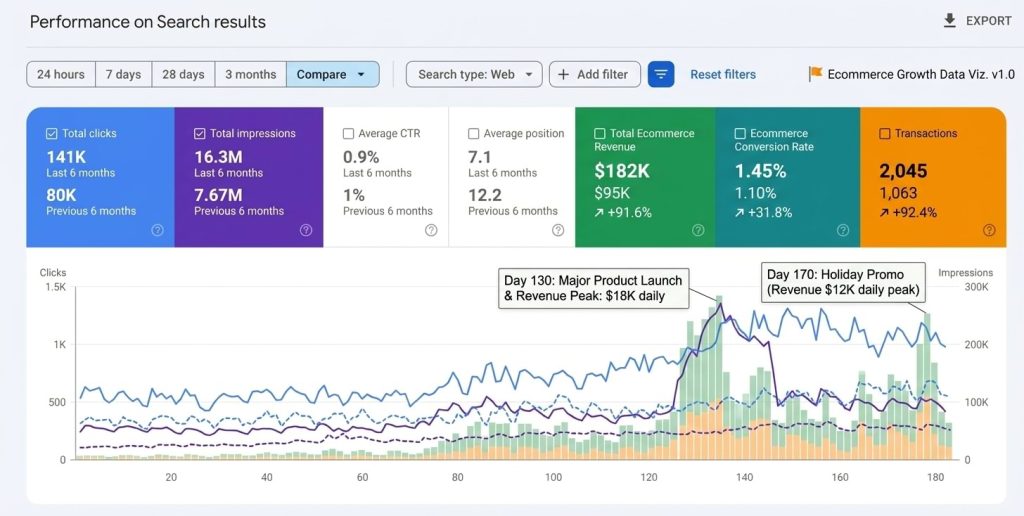
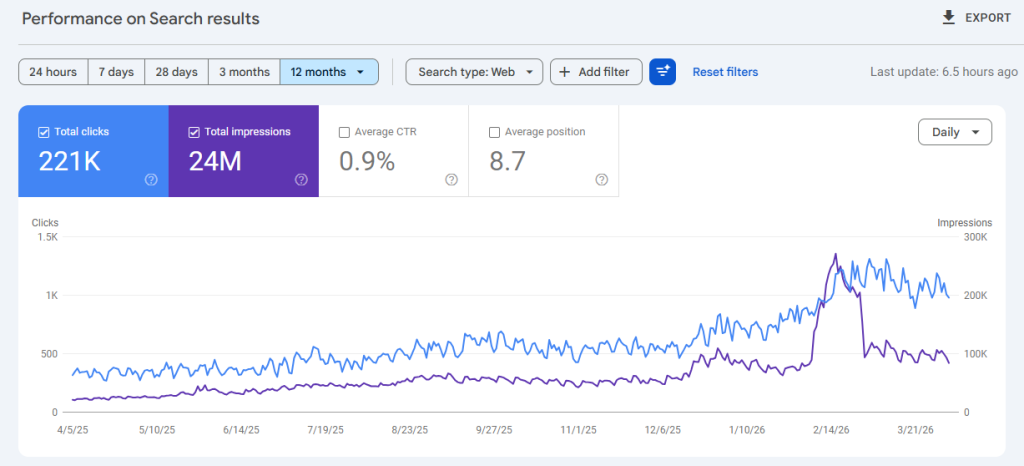
- Update cycle 1 (30 to 45 days): Early signs of recovery appear. Some product pages regain positions. Impressions begin stabilizing.
- Update cycle 2 (60 to 90 days): Full recovery typically materializes after the next core or relevant update confirms your improvements.
Recovery is not instant. If someone promises you overnight rankings restoration, that is a red flag. Sustainable ecommerce recovery takes consistent effort over one to two update cycles.
For a step-by-step walkthrough of exactly how I approach algorithm recovery engagements, including the diagnostic framework I use with every client, refer to my detailed guide on recovering traffic lost to Google AI Overviews, which covers the diagnostic methodology applicable to all update types.
Common E-commerce Recovery Mistakes to Avoid
I have audited enough post-update ecommerce sites to know which mistakes store owners repeat. Avoid these:
- Panic-deleting pages. Removing product pages without redirects destroys link equity and creates 404 errors. Always redirect or improve, never just delete.
- Relying on AI-generated product descriptions. Replacing thin content with bulk AI copy creates a different quality problem. Google’s systems are increasingly effective at identifying low-effort AI content across product catalogs.
- Ignoring category pages. Most store owners focus only on product pages. Category pages often carry more ranking authority and need attention too.
- Disavowing links without analysis. Not every unnatural-looking backlink is toxic. Aggressive disavowing can remove links that were actually helping your rankings.
- Waiting for the next update to fix itself. Algorithm updates do not reverse themselves. If your site was hit, the issues that caused the drop still exist. Doing nothing guarantees continued losses.
Understanding what went wrong is just as important as knowing what to fix. If you want to understand how Google’s spam detection system evaluates e-commerce sites specifically, the Fiverr and Upwork SEO recovery comparison covers the quality benchmarks Google applies to commercial sites.
Recommended External Resources
For the latest official guidance on how Google evaluates e-commerce and product content, review Google’s product structured data documentation, which outlines the exact schema requirements for product pages.
To understand the broader quality signals Google uses when assessing site reputation, the Google Search Quality Raters Guidelines provide the evaluation framework that directly influences how your store is scored.
Frequently Asked Questions
Why did my e-commerce site lose rankings after a Google update?
Most ecommerce ranking drops happen because of thin product descriptions, duplicate manufacturer content, faceted navigation generating thousands of low-quality indexed pages, or weak trust signals. Google’s core updates and spam updates specifically target these patterns.
How long does e-commerce SEO recovery take?
Typically, one to two Google update cycles, which translates to roughly 30 to 90 days. The timeline depends on how many pages need improvement and how quickly changes are implemented.
Can I use AI to rewrite my product descriptions for recovery?
Bulk AI-generated content often creates the same quality problems you are trying to fix. The most effective approach is human-edited content that incorporates genuine product experience, customer feedback, and original comparative insights.
Should I disavow all my backlinks after a spam update?
No. Aggressive disavowing without proper analysis can remove beneficial links. A targeted toxic backlink audit should identify only the links that are actually harmful before you submit a disavow file.
What is the most important first step for e-commerce recovery?
Run a comprehensive technical audit using Google Search Console and a crawler like Screaming Frog. Identify which pages lost traffic, what type of update caused the drop, and whether the issues are content-related, technical, or trust-related.
E-commerce store traffic dropped after a Google update?
I have recovered online stores across fashion, electronics, health supplements, and home goods. If your product pages lost rankings or your revenue dropped after a core update or spam update, I can diagnose exactly what happened and build a recovery plan specific to your store.
Get your free e-commerce store audit now.