
I get this question at least five times a week from site owners watching their traffic flatline: “Is Google penalizing my site because I used AI to write content?”
The short answer is no. Google does not penalize content simply because it was generated by AI. But the longer, more important answer is that AI content often triggers quality demotions that look and feel exactly like a penalty. I have recovered over 300 websites from algorithm-related traffic drops, and AI content issues are now the single fastest-growing cause I see in site audits.
Let me walk you through what Google actually targets, how to spot whether your AI content is the problem, and what to do about it.
Google’s Official Position on AI Content
Google has been clear and consistent on this point. Their official guidance on AI-generated content states that the method of content creation does not determine whether content violates their guidelines. What matters is quality, helpfulness, and whether the content was created primarily to manipulate search rankings.
Google’s Gary Illyes reinforced this in 2025, clarifying that content does not need to be “human-created” but rather “human-curated.” Editorial oversight, factual accuracy, and originality are what separate content that ranks from content that gets buried.
So if Google does not penalize AI content by default, why are so many AI-heavy sites losing traffic?
The answer comes down to a concept Google calls scaled content abuse. This policy targets websites that produce large volumes of low-value content to manipulate rankings, regardless of whether that content was written by humans, generated by AI, or assembled through any other method. AI simply makes it easier to produce this kind of content at scale, which is why AI-heavy sites get caught more often.
Signs Your AI Content Triggered a Quality Demotion
Not every traffic drop is caused by AI content. But if your site relies heavily on AI-generated pages, here are the patterns I consistently find during site recovery audits.
Traffic dropped immediately after a core or helpful content update. If the timing aligns with a confirmed Google core update, your content quality is likely the trigger.
Pages lost impressions across the board, not just a few keywords. A sitewide decline in Google Search Console usually points to a quality classifier flagging your domain rather than a single page issue.
Content reads well, but says nothing original. This is the hallmark of unedited AI output. The sentences are grammatically correct, the structure looks professional, but there is no first-hand experience, no unique data, and no perspective that cannot be found on ten other pages covering the same topic.
High bounce rates and low time-on-page. Users can sense generic content. When they land on a page that repeats surface-level information without depth, they leave. Google measures these engagement signals and adjusts rankings accordingly.
How to Audit Your Site for AI Content Risk?
Before you can fix the problem, you need to know exactly where it exists. Here is the framework I use when auditing sites for AI content risk.
Step 1: Pull your full page inventory. Use Screaming Frog or Semrush to crawl every indexable page. Export the list with word count, meta descriptions, and heading structures.
Step 2: Check for content patterns. AI-generated content tends to follow predictable structural patterns. Look for repeated intro formulas, identical paragraph lengths, and conclusions that all follow the same template. If 50 blog posts on your site read like they came from the same prompt, that is a red flag Google’s systems will likely catch.
Step 3: Run a plagiarism and originality check. AI tools pull from existing content across the web. Even if the output is not a direct copy, it may closely mirror existing pages. Tools like Copyscape or Originality.ai can flag content that overlaps too heavily with other indexed pages.
Step 4: Cross-reference with Search Console data. Compare your page-level performance before and after the most recent algorithm updates. Pages that lost 80% or more of their impressions are your highest-priority targets for rewriting.
Step 5: Evaluate E-E-A-T signals. Does the page have a real author byline? Is there an author bio with verifiable credentials? Are there original images, screenshots, or data tables? If the answer is no to most of these, your content is vulnerable. I wrote a detailed breakdown of this process in my guide on helpful content update recovery.
Content Rewriting Framework: Making AI Content Pass Quality Checks
Deleting all your AI content and starting fresh is rarely the right move. In most cases, the smarter approach is to transform existing content into something Google considers genuinely helpful. Here is the rewriting framework I use with clients.
Add first-hand experience. Google’s E-E-A-T framework puts heavy weight on the first E, which stands for Experience. Inject real observations, client examples, proprietary data, or personal case studies into every page. AI cannot generate first-hand experience. This is your strongest differentiator.
Replace generic claims with specific data. Instead of “many websites saw traffic drops after the update,” write something like “I audited 8 sites between January and March, and 6 of them had lost over 40% of organic traffic within 30 days of the update.” Specificity builds trust with both readers and search algorithms.
Restructure the content around user questions. AI tends to produce content organized by topic hierarchy. Real searchers think in questions. Restructure your headings around the actual queries people type into Google, then provide direct, concise answers before expanding with detail.
Build author authority on the page. Add an author box with a real photo, verifiable credentials, and links to other published work. Implement Person schema markup that connects your author identity to your content. I covered the full technical process in my spam update recovery guide.
Real Case: a Canadian news publisher and the 100% AI Content Problem
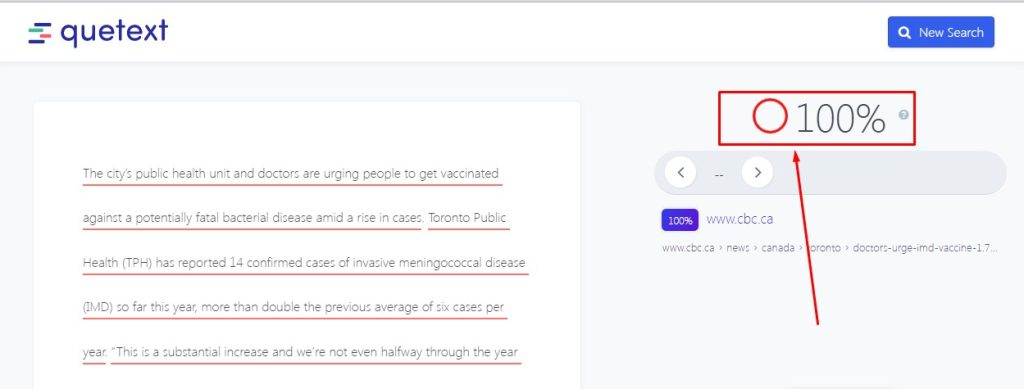
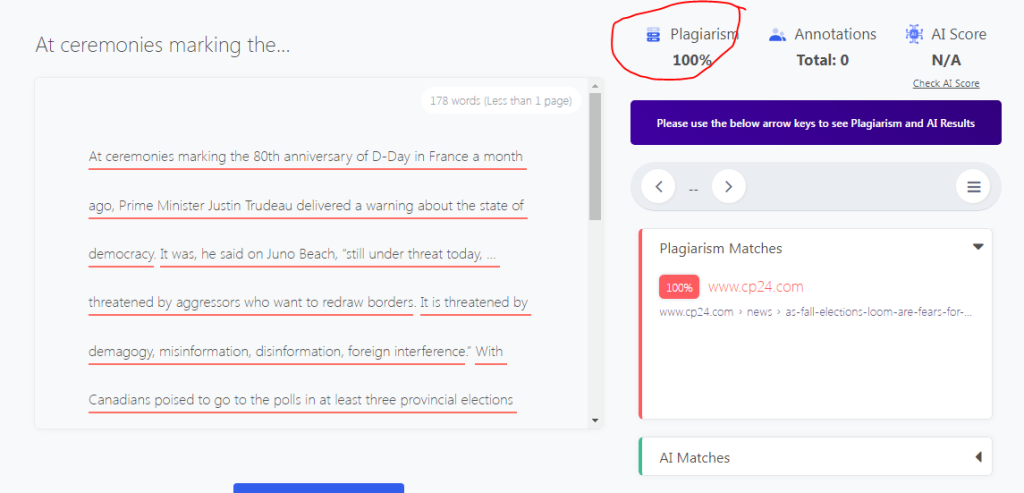
One of the clearest examples I have worked on is a Canadian news publisher. When I audited this site, every single article had been generated by AI with zero editorial oversight. The content was published at scale using auto-posting tools, and plagiarism checks revealed that most posts were duplicated or closely paraphrased from other indexed sources.
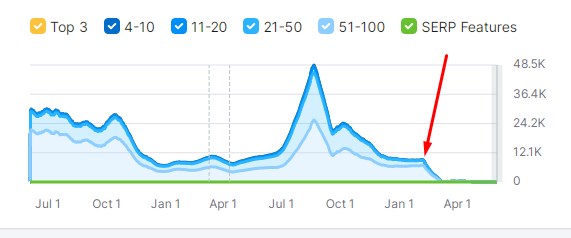
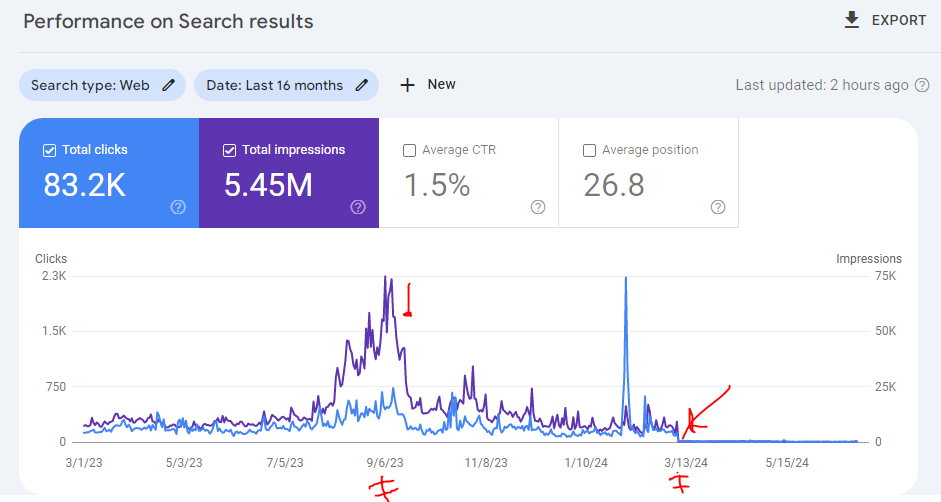
The site was hit by Google’s AI-generated content quality classifier. Traffic dropped to near zero. The site had no author pages, no about page with real credentials, no original reporting, and no E-E-A-T signals of any kind.
The recovery plan I recommended included stopping all auto-posted content immediately, manually editing every existing article title and body to add original perspective, building proper E-E-A-T infrastructure, including author bios and an editorial standards page, creating new manually written content to demonstrate quality improvement, and managing the backlink profile to remove toxic links pointing to low-quality pages.
This is exactly the kind of situation that triggers what many site owners call an “AI content penalty.” It is not technically a penalty in Google’s terminology. It is a quality demotion triggered by content that fails to meet the standards Google’s helpful content system evaluates. But the result is the same: your pages disappear from search results.
What You Should Do Right Now?
If you are using AI tools to create content, you are not doing anything inherently wrong. Google has made that clear. But if you are publishing AI output without human editorial review, original expertise, and genuine value for readers, you are taking a significant risk.
Start by auditing your most important pages using the framework above. Prioritize any page that lost significant traffic after a recent Google algorithm update. Rewrite those pages with first-hand data, specific examples, and proper E-E-A-T signals. Then monitor your Search Console impressions over the next 30 to 60 days to track recovery.
AI is a tool, not a shortcut. The sites that use AI responsibly, as a drafting aid rather than a publishing machine, are the ones that continue to rank.
Worried your AI content is hurting your rankings?
I offer a free AI content risk assessment where I review your site’s content quality signals, identify pages at risk, and give you a clear recovery roadmap. Request your free assessment here.
Where this page stops. This covers AI-assisted content and whether Google treats it differently. If your problem is the sheer number of pages rather than how they were written, that is a separate policy with a separate fix, covered in scaled content abuse recovery.
Frequently Asked Questions
Does Google automatically penalize AI-generated content?
No. Google evaluates content based on quality, helpfulness, and originality. The method of creation, whether human or AI, is not a ranking factor. However, AI content that is low quality, duplicative, or published at scale to manipulate rankings will trigger quality demotions under Google’s scaled content abuse policy.
Can AI-written articles still rank on the first page of Google?
Yes. AI-assisted articles that include human editorial oversight, original data, and strong E-E-A-T signals can rank just as well as fully human-written content. The key is treating AI as a drafting tool, not as a complete publishing solution.
How do I know if my AI content caused a traffic drop?
Check Google Search Console for sitewide impression declines that align with confirmed algorithm update dates. If multiple AI-generated pages lost visibility simultaneously, the content quality is likely the cause. Run a content audit focusing on originality, E-E-A-T signals, and engagement metrics.
Should I delete all my AI content?
Not necessarily. In most cases, it is more effective to rewrite and improve existing content rather than delete it. Focus on adding first-hand experience, original data, proper author attribution, and genuine value. Delete only pages that are duplicative, thin, or impossible to salvage with editorial effort.
What is scaled content abuse?
Scaled content abuse is Google’s spam policy that targets websites producing large volumes of content primarily to manipulate search rankings. This applies to both AI-generated and human-written content. Publishing hundreds of generic, templated pages with no unique value is the most common trigger.